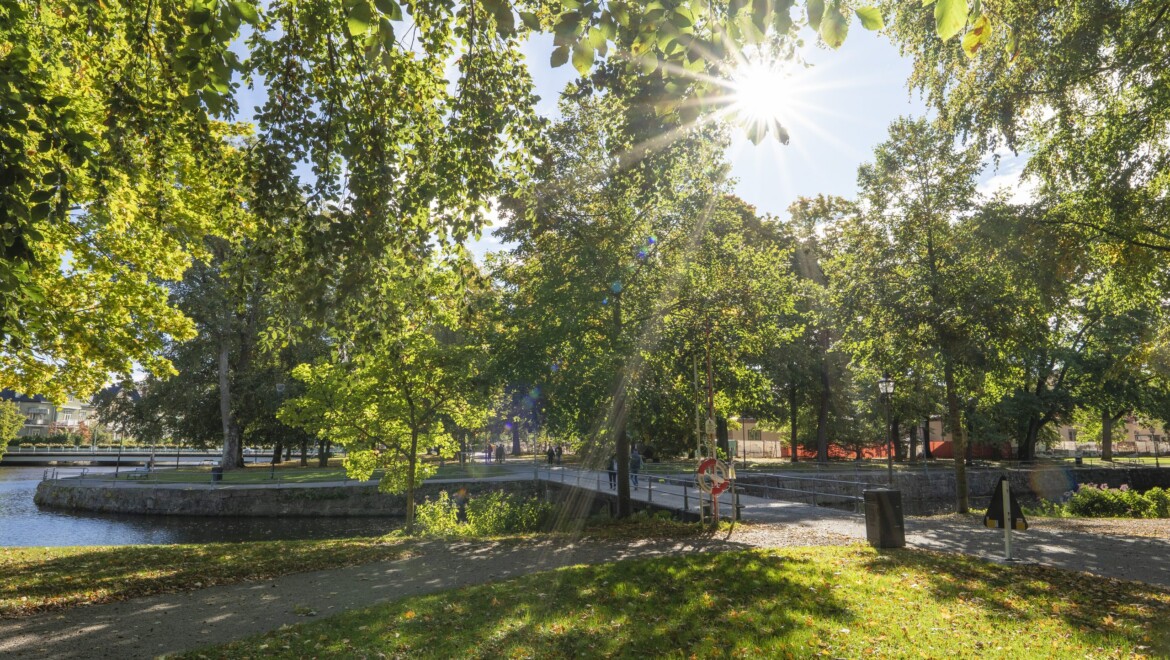
The Ghost Town in Slottsparken
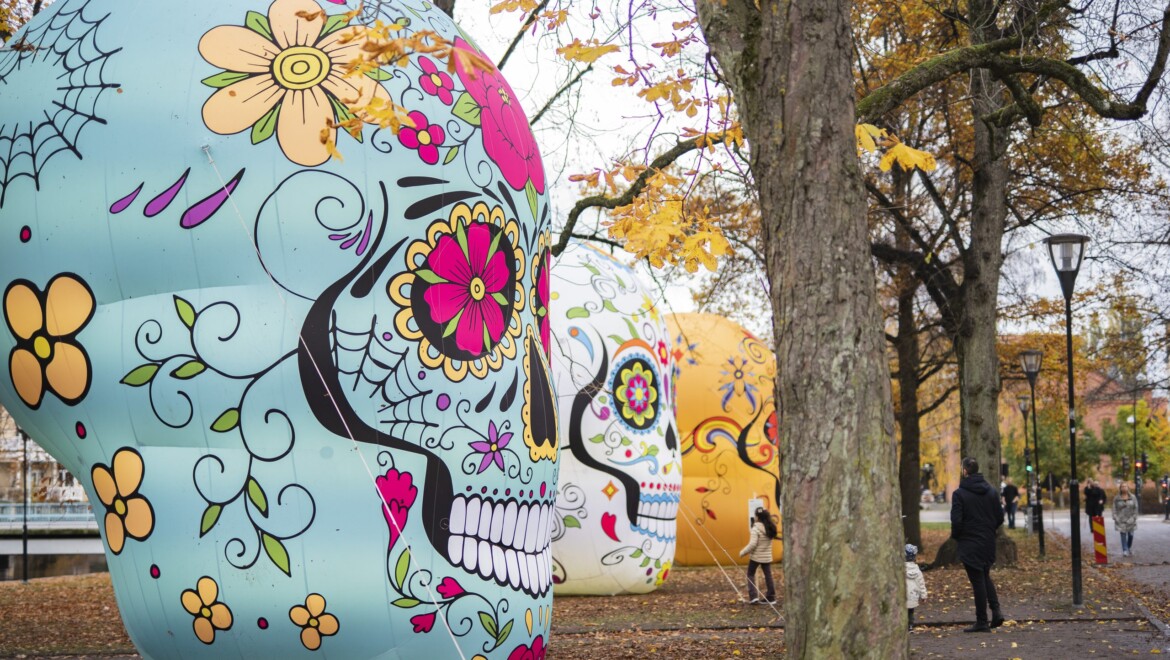
During fall break, eight large, colorful skulls will light up Slottsparken—creating a magical walking path. The skulls will be on display between 10 a.m. and 10 p.m. every day from October 23 to November 1.
With its giant skulls, Slottsparken is part of the Ghost Town in Örebro. There, you’ll find a variety of cozy and spine-chilling spots and activities for the whole family.
The skulls originated in Mexico
The beautiful colors and patterns of the large skulls are inspired by the sugar skulls sold in Mexico during the Día de los Muertos—Day of the Dead—celebration.
The sugar skulls are made of sugar, chocolate, and other sweet ingredients. They come in various sizes and are decorated with colorful crowns, spirals, and ribbons. Their colors and patterns also inspire the clothing and makeup that both children and adults wear on Día de los Muertos.
There are several explanations for the origin of Mexican sugar skulls. The most common is that they replace the skulls that were long ago placed on altars to honor the gods. The purpose of the sugar skulls is to serve as a reminder that death is always present. Some skulls bear the name of a deceased person. Others bear the name of someone who is still alive, simply to remind us of everyone’s inevitable fate.
The Castle Park Then and Now
Back to the Castle Park itself. As the name suggests, it’s located right next to Örebro Castle, in the heart of the city. It was Governor Johan Abraham Hamilton who had the park laid out in the 1770s, in what is known as the castle’s outer courtyard. Previously, a row of log buildings stood here, but Hamilton had them torn down. Instead, the area was planted with flowers and deciduous trees.
For the first hundred years, Slottsparken was closed to the public, but in 1877 it became accessible to everyone. By then, the winding paths had become a natural gathering place for the city’s residents.
Today, Slottsparken, along with the palace and the entire Slottsholmen area, is protected as a state-designated historic landmark.
Here you can stroll along the paths, cross the occasional bridge, and discover Örebro’s oldest and tallest beech trees. In the part of the park closest to the castle, you can take a closer look at Per Petersson’s 2001 sculpture *Svunnen tid och nya tider* (Past and Present), also known as *Tefatet*.
The Örebro County Museum is located in the eastern part of the park, next to Engelbrektsgatan. The county museum is in the final stages of an extensive renovation and is expected to open at the turn of the year 2027/2028.