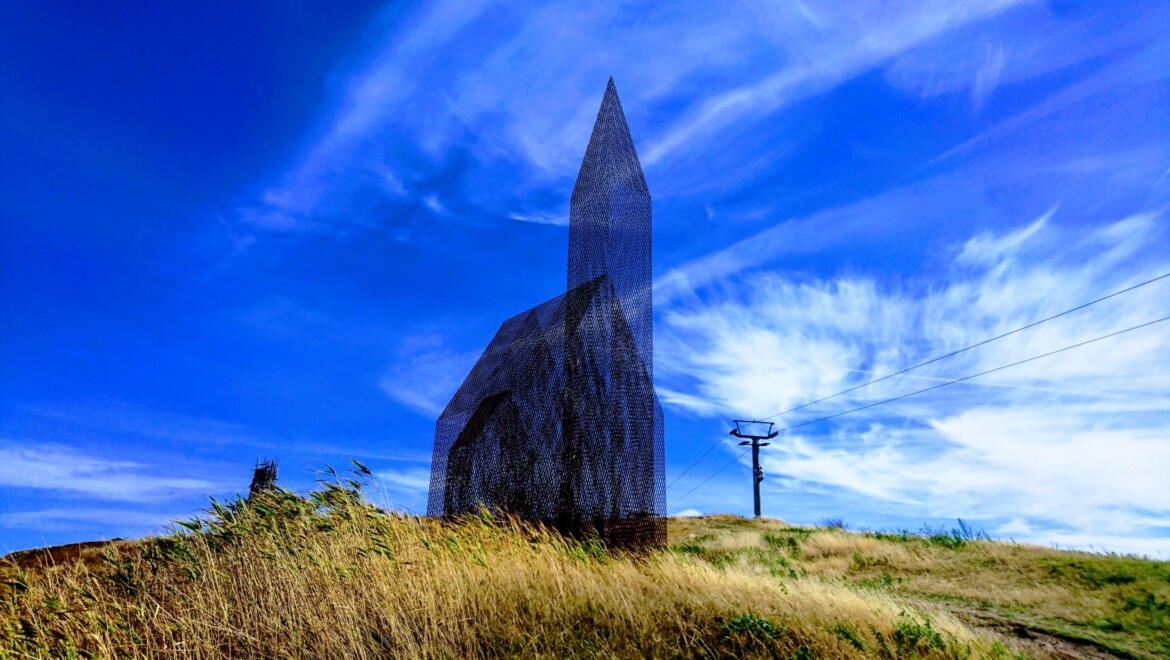
Art on the Hill is a unique sculpture park located at the top of Kvarntorpshögen in Kumla. Here, you can stroll among works by some of the country’s leading artists.
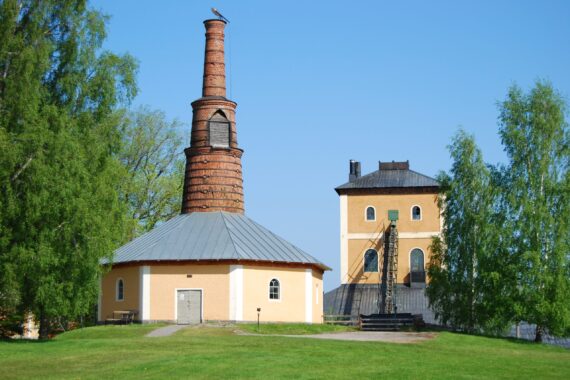
Kvarntorpshögen is one of our most remarkable industrial landmarks. As oil was extracted from shale, hot slag was produced, which gradually formed a slag heap over 100 meters high. This “hill” is now a popular destination for day trips and a unique exhibition space for the sculpture park.
The story behind Art on High
In the mid-1990s, two art enthusiasts came up with the idea of launching an art exhibition at the top of the hill. Anders Fasth (gallery owner) and Olle Medin (artist) thus embarked on a journey that, some 20 years later, has resulted in one of Sweden’s premier sculpture destinations. A place that attracts around 30,000 visitors every year.
The entire area is also a recreational zone where art, industrial history, and fitness initiatives come together. Here you’ll find hiking and mountain biking trails, skiing, golf, outdoor gyms, and the popular fitness initiative “Conquer the Stairs.”
One of Europe's longest wooden staircases
Kvarntorpshögen is located in the Kvarntorp outdoor recreation area and offers a magnificent view of the Närke Plain. You can drive all the way up to Kvarntorpshögen during certain times of the year. The steep incline (18%) means you’ll need to use the same driving technique as on the steepest roads in the Alps.
But why not skip the photo and instead take on the challenge of climbing the 427 steps up one of Europe’s longest wooden staircases? Along the way, there are several landings where you can catch your breath for a moment while enjoying the fantastic view.
Kvarntorpshögen and its story of Sweden’s oil adventure have been a landmark on the Närke Plain ever since shale oil extraction ceased in the late 1960s. The 100-meter-high ash mound left over from the oil era still has warm sections inside, and steam can sometimes be seen seeping up from the mound.
More culture