The Ghost Town at the Museum of Biology
During fall break, the Museum of Biology is even more exciting. That’s when you can go looking for a new species—glow-in-the-dark ghost animals—with a flashlight (your phone’s flashlight works great) in the darkened museum.
This week, the Ghost Animals and the Biological Museum are part of “Ghost Town” in Örebro. If you’d like to explore the ghost theme further, you’ll find plenty of spooky and thrilling activities in Karlslund, Örebro Castle, Slottsparken, and Wadköping.
Hours of Operation, Week 44, 2026
Saturday, October 24 – Sunday, November 1, 10 a.m.–4 p.m.
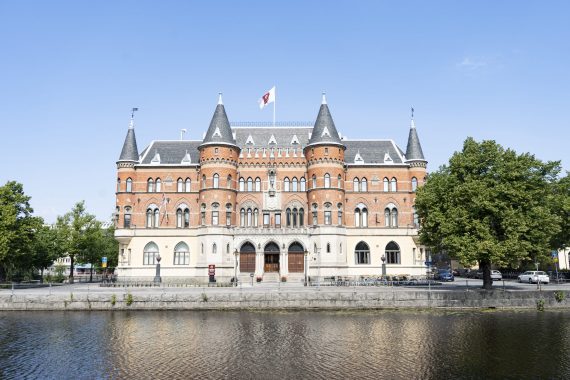
Directions: The Biology Museum is located in the building known as "Sibirien" at Karolinska High School, Olaigatan 25, Örebro.
Buy a ticket: You can purchase tickets at the Museum of Biology or the Castle Gift Shop at Örebro Castle. They will soon be available for purchase on the castle’s ticket website as well.
The Biology Museum is both a fun and somewhat exciting museum—and at the same time a real hidden gem. It’s located at Karolinska High School, just a stone’s throw from Örebro Castle. A few years ago, the museum was actually about to be turned into a computer lab, but fortunately, that didn’t happen. Since the museum is located at a school, it’s only open during summer break and fall break (week 44).
A Unique School Museum
When the museum opened in 1864, it was one of countless school museums. This was long before the combination of animals and nature was conveyed to students—some more, some less, eager for knowledge—through films and photographs. But times changed, and soon Karro—as the school has been called over the years by the people of Örebro—was one of the few educational institutions where the museum still existed. After facing the threat of closure for a long time, both the premises and the exhibits were restored, and since then the museum has once again been open to visitors. However, it is only open during periods when school is not in session.
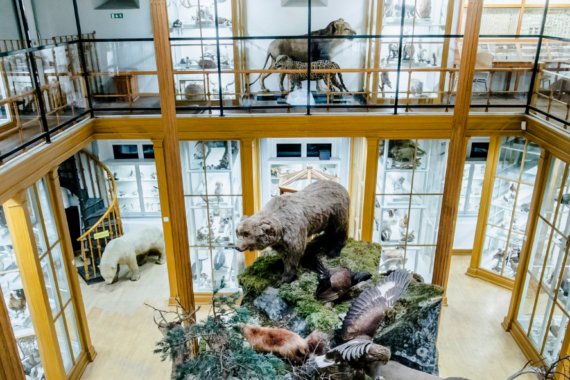
The museum isn't particularly large, but it's very extensive. There are over 1,000 birds alone. So take your time when you visit Örebro's most unusual tourist attraction. It's worth it.

Ostriches, armadillos, and the occasional moose
The moose. It’s hard to miss. From its slightly elevated spot in the center of the room, surrounded by an entourage of Nordic wildlife, it casts a challenging gaze your way as you step through the massive double doors. As if it were telling you that if you’ve ever doubted who the king of the forest is, you can stop wondering now.
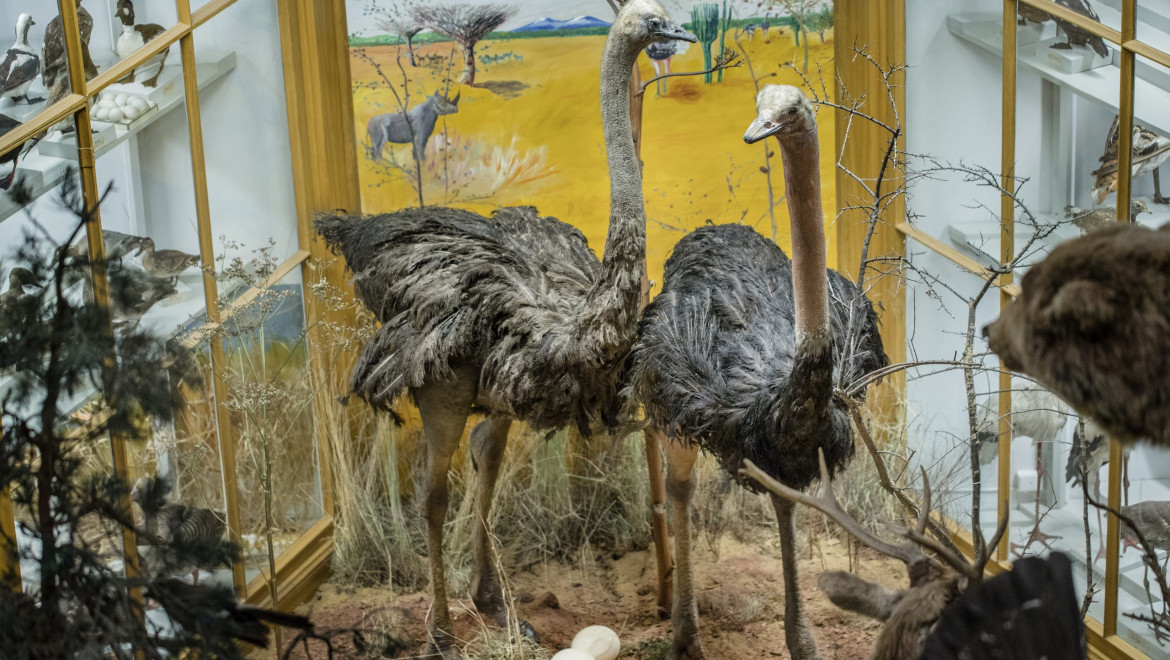
But the moose will have to excuse itself. Two seemingly angry ostriches are vying for your attention. Literally, birds out of place among bears, lynxes, and wolves.
The grand ground floor, with its veined-painted columns, focuses on Nordic fauna. Along the walls stand display cases upon display cases filled with stuffed animals—large and small, famous and obscure. More await on the balcony. Armadillos, crocodiles, insects, and birds from every corner of the world mingle with fish—not always in the best condition—and a curious collection of animals in glass jars filled with alcohol. You probably won’t forget the pufferfish with its marbles for eyes. And definitely not the dissected salamander.
An elephant’s head is one of the museum’s more unusual exhibits. To emphasize its exotic nature—as if that were necessary—someone has hung four African spears beneath its trunk. The fact that it is an Indian elephant does not seem to have bothered the museum’s management at the time.
The Final Resting Place of Bambina, the Circus Elephant
The elephant’s name was Bambina, and she died suddenly while her circus was visiting Örebro in 1927. The German circus director, evidently a shrewd businessman, did not let this get him down but quickly saw an opportunity to make a little money off his deceased star. The museum was offered the elephant’s carcass for the staggering sum of one thousand kronor—roughly thirty times that amount in today’s currency. The impoverished museum, whose collection otherwise consisted almost exclusively of donations, politely but firmly declined, and Bambina was laid to rest at the animal cemetery in Adolfsberg.
According to legend, some students secretly dug up the body, removed the head (it’s best not to dwell on the details here), and brought it to the school, where it was stuffed. Whether this is actually true, no one seems to know anymore. But somehow Bambina’s head ended up at the museum, where it has hung ever since.
Reservations
If you'd like to visit the Biological Museum with your own group outside of regular opening hours, you can book a guided tour for groups. More information is available on the Örebro Castle website.
More history and more museums.
Take a journey through time in Bergslagen
Örebro County Museum: Art and Cultural History
18 Unique Museums in and Around Örebro
5 museums for curious kids—and adults
Visit Järle Station – Sweden’s oldest train station