Cremation has been practiced in many cultures for thousands of years. What was known in Sweden as “eldbegängelse” was the most common form of burial until the arrival of Christianity about a thousand years ago.
In the late 18th century, a movement emerged in Europe that advocated cremation over burial. The Church opposed these new ideas, but the shortage of land in the rapidly growing cities argued in favor of a space-saving form of burial. The first European crematorium was completed in Milan in 1876.
Interest in this ancient form of burial also grew in Sweden. In 1882, the Swedish Cremation Society was founded; its name—which sounds rather jarring to modern ears—was soon changed to the Swedish Society for the Cremation of the Mortal Remains. In 1887, the first Swedish crematorium was built in Stockholm based on designs by Gustaf Lindgren. Three years later, another was built at Östra Cemetery in Gothenburg. The church remained cautious for a long time, and the first crematoriums were financed through private donations.
Örebro finishes third
The idea of cremation also reached Örebro. Six years after the founding of the Swedish Cremation Association, a local chapter was established in the rapidly growing city. The goal was to raise funds for a crematorium, but progress was slow. It wasn’t until thirty years later that the idea became a reality, after wholesaler Lars Erik Andersson donated the necessary funds.
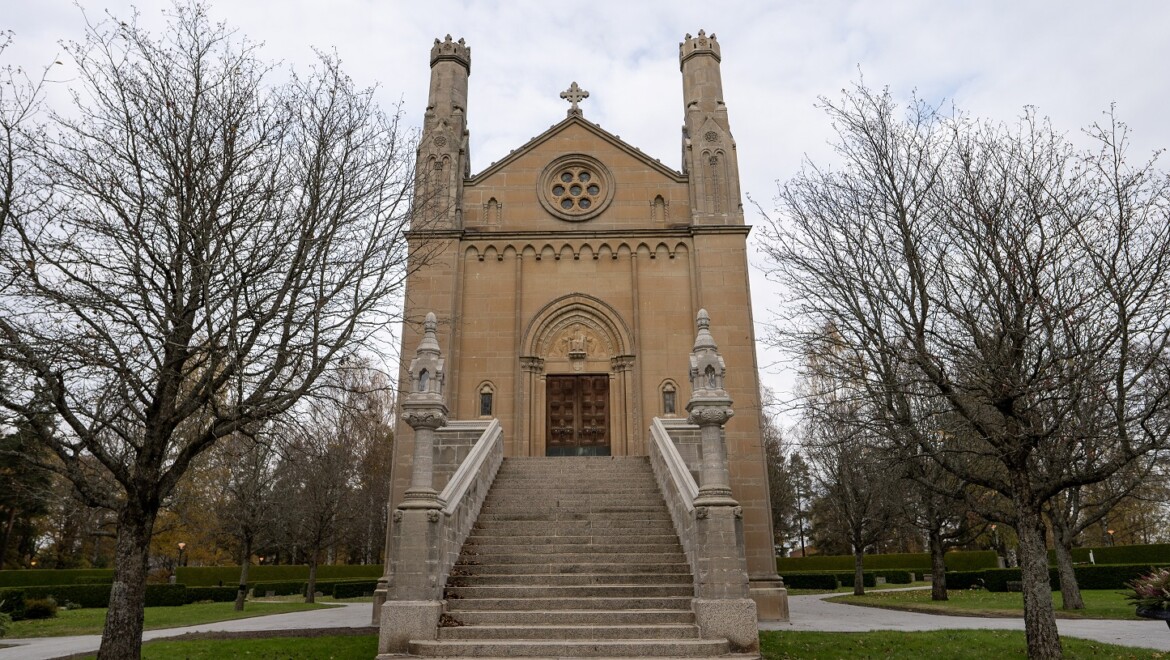
In December 1921, the new crematorium and its funeral chapel were inaugurated, becoming the third of its kind in the country. Just as in Stockholm, architect Gustaf Lindgren was responsible for the designs. The result was a tall, narrow building with walls of limestone from the Hällabrottet quarry outside Kumla and a roof clad in Grythyttes slate. The main entrance was flanked by two towers—actually chimneys—and adorned with a sculpture by the sculptor J.A. Wetterlund.
Public interest in cremation remained low. It wasn’t until ten months after the facility opened that the first cremation took place—ironically, that of the donor himself. Among the more famous figures cremated in Örebro during those early years was the author Ellen Key.
The ovens are turning off
After a slow start, interest grew rapidly. By the 1970s, the number of cremations had risen so much that a new, larger crematorium was needed. In 1975, the new crematorium at Norra Cemetery was inaugurated, and its predecessor was left to fall into disrepair. For a time, demolition was discussed, but in 1993, an extensive renovation saved the building. Another renovation was carried out in 2020, and the Örebro Crematorium is now considered the best-preserved of Sweden’s older crematoriums.
During All Saints' Day, the Church of Sweden keeps the crematorium open to the public. Take the opportunity to visit a building that is one of a kind and that tells a rarely told story about how a thousand-year-old tradition was broken.
Would you like to read more exciting stories? Here you can read about the abandoned industrial town of Björnhammaren.
Would you like to learn more about Örebro's history?
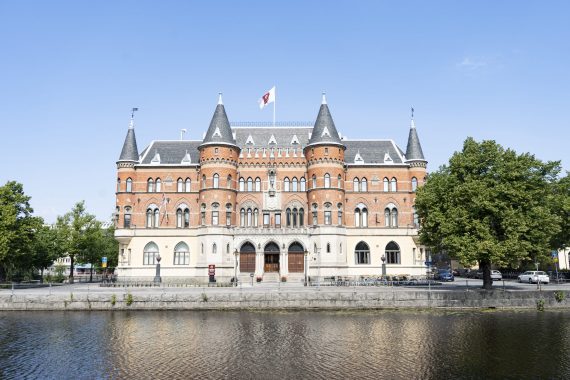
Borgen – a historic hotel in Örebro
5 Ghosts That Live at Örebro Castle